

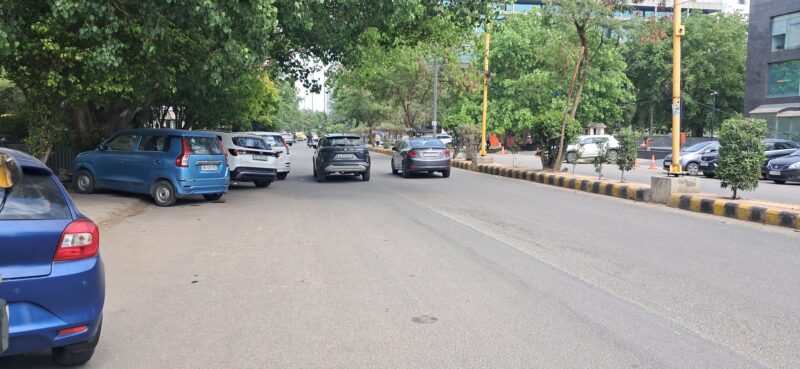
Located in the south-eastern quadrant of New Delhi, Jasola Vihar represents one of the most meticulously planned urban developments executed by the Delhi Development Authority (DDA). Characterized by its strategic geographic positioning, it serves as a critical bridge connecting the national capital with the National Capital Region (NCR) hubs of Noida and Faridabad. This comprehensive informational overview explores the civic infrastructure, robust transit networks, and commercial viability that define Jasola Vihar as a premium South Delhi destination.
1. Strategic Geographic Positioning
Bordering the Mathura Road and the Outer Ring Road, Jasola Vihar enjoys an enviable geographic footprint. It is flanked by the Okhla Industrial Area to the west, Sarita Vihar to the south, and the Yamuna riverbed to the east. This central location ensures that corporate professionals and local inhabitants experience highly optimized commute times. The integration of high-speed arterial corridors means that reaching the central business districts of Connaught Place or Nehru Place is a streamlined, efficient process.
2. The Dual-Line Transit Framework
This micro-market holds the distinct advantage of being serviced by two separate metro corridors, making it a logistics powerhouse. The Jasola Vihar Shaheen Bagh Metro Station operates on the Magenta Line, offering direct, signal-free transit to the domestic terminal of the Indira Gandhi International Airport and the knowledge parks of Noida. Simultaneously, the Jasola Apollo Metro Station on the Violet Line provides rapid access to the heritage and government sectors of Central Delhi. For vehicular traffic, the Kalindi Kunj bridge acts as a vital conduit, alleviating peak-hour congestion and ensuring smooth inter-state movement toward Uttar Pradesh.
3. Commercial and Corporate Integration
Jasola Vihar is anchored by the formidable Jasola District Centre. This commercial nucleus houses Grade-A corporate edifices, including landmarks like DLF Tower A and Salcon Aurum. These structures feature advanced architectural engineering, massive floor load capacities, and uninterrupted power redundancies designed for heavy IT operations.
The local ecosystem caters primarily to multinational corporations, IT enterprises, and healthcare administration offices. Securing commercial assets in this vicinity means placing a business at the literal crossroads of Delhi’s premier industrial and administrative corridors, specifically adjacent to the manufacturing and logistics hubs of Okhla Phases I, II, and III.
Infrastructure Insight: The subsurface infrastructure of Jasola Vihar, including wide drainage networks and high-capacity water distribution grids, was explicitly engineered to accommodate high-density corporate occupation without experiencing the chronic utility failures often seen in older South Delhi colonies.
4. Healthcare and Institutional Proximity
A neighborhood’s viability is often measured by its proximity to world-class institutions. Jasola Vihar shares its immediate boundary with Indraprastha Apollo Hospitals, one of Asia’s most advanced multi-specialty healthcare facilities. This proximity is invaluable for medical professionals and healthcare-adjacent enterprises looking to establish a base of operations. Furthermore, premier educational institutions, including Jamia Millia Islamia University, are situated within a short transit radius, fostering a highly educated local demographic and a robust talent pool for resident corporations.
5. Asset Value and Long-Term Stability
While analyzing the real estate landscape of South East Delhi, Jasola Vihar stands out for its sustained asset appreciation and structural stability. The continuous upgrading of surrounding public infrastructure—such as the recent widening of the Mathura Road underpasses—directly enhances the intrinsic value of properties here. Corporate entities and private investors look toward Jasola Vihar not just for immediate operational deployment, but for long-term wealth preservation. The strict zoning laws enforced by local authorities actively prevent haphazard construction, thereby protecting the aesthetic and structural integrity of the district. Ownership of commercial or residential assets in this sector signifies a highly strategic holding in one of the capital’s most resilient micro-markets.
For Rent
Rs.300,000
Bathrooms
2
Area
2500
sq ft
For Rent
Rs.120
Bathrooms
1
Area
1700
sq ft
For Rent
Rs.110
Bathrooms
2
Area
2300
sq ft
SALE
Rs.25,000
Bathrooms
1
Area
1056
sq ft.
For Rent
Rs.576,000
Area
4800
sq ft
